

At a glance
- Low sperm count or poor motility
- Sperm retrieved surgically (TESA / PESA)
- Poor fertilisation in a previous IVF cycle
- Frozen sperm or eggs
What is ICSI?
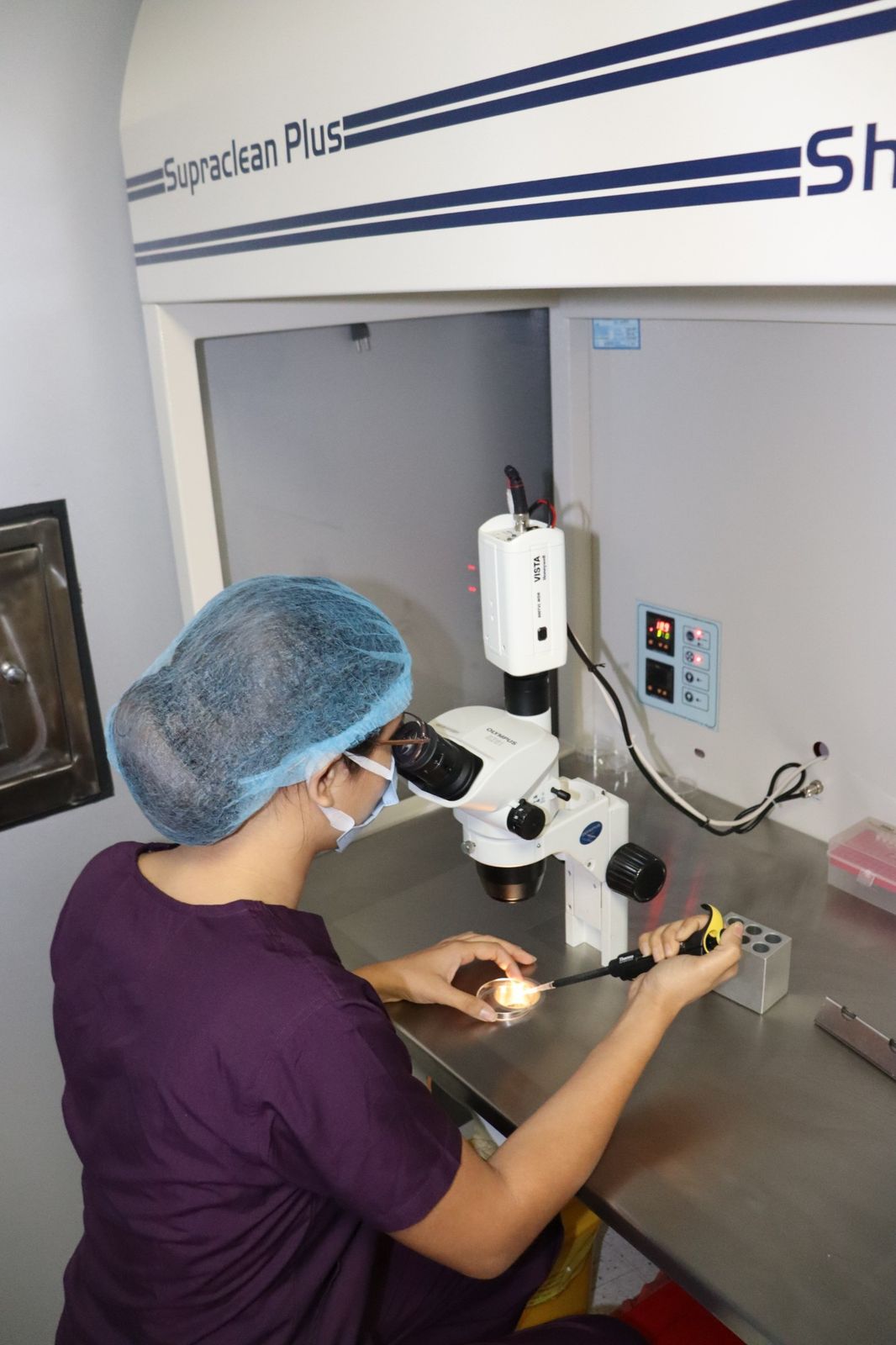
ICSI treatment is an advanced fertility procedure in which a single sperm is injected into the egg. In this procedure, the female partner undergoes ovarian stimulation with the help of fertility medication for follicle growth and egg development. These eggs are then collected under ultrasound guidance. The semen sample is prepared by centrifugation, which isolates good-quality live sperm. The ICSI procedure is then conducted by injection of a single live sperm into the egg.
When is ICSI considered?
ICSI is considered safe and widely used in fertility treatment. Like any medical procedure, there are some potential risks involved. ICSI is used in cases of male factor infertility, especially when the male partner has an abnormal semen analysis. Other conditions where ICSI may be used are the following:
- Previous poor fertilization with IVF
- Variable sperm counts
- Unexplained infertility
Benefits of ICSI Treatment
- It ensures fair chances of fatherhood to males with a severely compromised semen sample.
- It avoids fertilization failure that can be devastating news for a couple even after getting a fair number of oocytes.
Risks Involved in the ICSI Procedure:
There is a small chance of egg damage during an ICSI procedure due to needle insertion, morphology-based selection of sperm in ICSI rather than natural sperm selection for fertilizing oocytes in IVF, technology, and increased cost.
Are there differences in embryo quality or pregnancy rates between ICSI and non-ICSI embryos?
There is no difference between embryo quality and the success rates of ICSI vs. non-ICSI embryos.
Success rate of ICSI:
It ensures a high fertilization rate of 70-80%; through live birth, the chances are 30-40%, which will also depend on other factors: oocyte quality, female age, and the uterus.
Frequently asked questions
How is ICSI different from IVF?
In IVF, sperm and eggs are placed together in a dish; in ICSI an embryologist injects one selected sperm into each egg under a microscope.
Does ICSI affect the baby’s health?
ICSI is a well-established technique used worldwide. Your doctor will discuss any specific genetic considerations for your situation.
The information on this website is for general education and does not replace a consultation. Treatment plans and outcomes differ from person to person; no treatment can guarantee pregnancy or a live birth.