

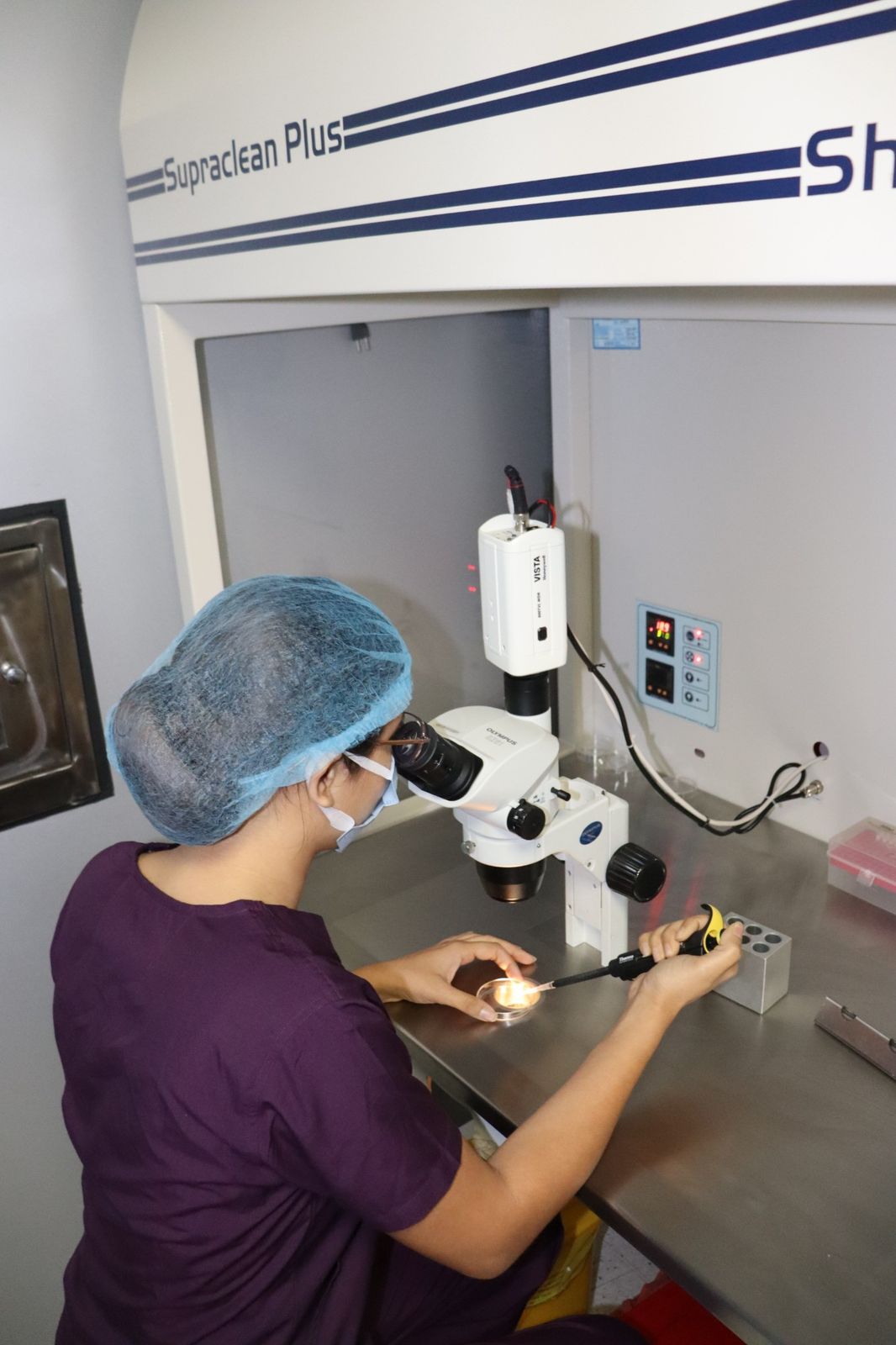
The ICSI, better known as IMSI for its acronym in English (intracytoplasmic morphologically selected sperm injection), is a laboratory technique used in IVF treatments (IVF) that involves inserting sperm into the egg morphologically selected.
IMSI is a real-time method where sperm are selected before the microinjection takes place. This is done using an inverted microscope that can provide much greater magnification (around 6000 times) than that normally used in reproductive laboratories (200 times) to carry out ICSI.
With this microscope, biologists can see the internal morphology of sperm and discard those with abnormalities. Being able to select sperm without morphological alterations is believed to increase the chances of successful implantation of the pre-embryo and decrease the likelihood of miscarriage.
Further reading
Frequently asked questions
Is IMSI better than ICSI for every couple?
No. ICSI remains the standard, effective treatment for most male-factor problems. IMSI adds a more detailed, high-magnification sperm selection step and may be worth discussing in selected cases, such as very poor sperm shape, high DNA fragmentation or repeated failed cycles. IMSI vs ICSI explained.
Is egg collection or embryo transfer different with IMSI?
No. For the woman the IVF cycle is exactly the same. The only difference is in the laboratory, where the embryologist examines sperm at very high magnification before injecting one into each mature egg.
Do I need a sperm DNA fragmentation test before IMSI?
It is not always required, but it can add information a standard semen analysis does not give. Your doctor will decide based on your semen report and any history of failed cycles or miscarriage. Understanding your semen analysis.
The information on this website is for general education and does not replace a consultation. Treatment plans and outcomes differ from person to person; no treatment can guarantee pregnancy or a live birth.